Medically reviewed by Dr. Steven Lee, DDS · Last reviewed July 13, 2026. Educational information, not a substitute for an exam — talk to our Hebron office.
Understanding Your Denture Options
Missing teeth affect more than just your appearance. They can shift your remaining teeth out of place, which often leads to jawbone loss over time. We offer several ways to fix this.
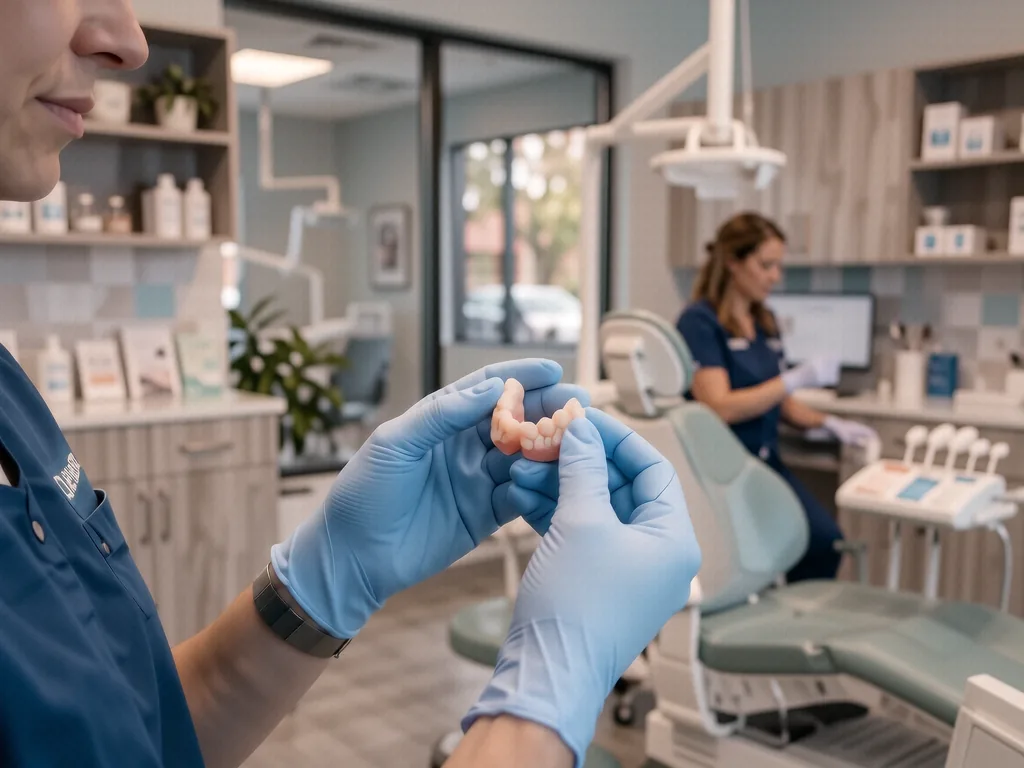
Full dentures are designed for patients who have lost all their natural teeth in an upper or lower arch. These appliances sit against your gums and use suction or adhesive to stay in place. While they provide a complete look, they require some practice to master.
Partial dentures serve a different purpose. If you still have several healthy teeth left, we can design a partial that clips onto them for extra stability. This prevents your remaining natural teeth from drifting into empty spaces.
- Full Dentures: Complete replacement for an entire arch.
- Partial Dentures: Bridges the gaps between existing teeth.
- Implant-Supported Dentures: Uses dental implants to snap the denture firmly in place.
Signs You Might Need Replacement Teeth
You might be struggling without realizing it. Many patients in Hebron come to us after noticing small changes in their daily routine. It is often a gradual process.
If you find yourself avoiding certain foods like corn on the cob or steak because they are too difficult to chew, your teeth may be failing. You might also notice that your cheeks look slightly sunken. This happens when the bone supporting your face begins to recede due to tooth loss.
Other common signs include:
Difficulty speaking clearly or whistling sounds during conversation.
Visible gaps between remaining teeth.
Soreness in the gums or jaw joints.
What to Expect During Your Care
We make the process straightforward. Our team at Crossroads Dental Group focuses on comfort from your very first consultation.
First, we perform a thorough exam of your mouth and bone structure. We need this information so that we can create a design that fits your specific anatomy perfectly. After we decide on the best type of denture for you, we take precise impressions using high-quality materials like PVS silicone to capture every detail.
The fabrication process takes a few weeks. While our lab works on your custom piece, we ensure your gums are healthy and ready for the new appliance. Once the dentures arrive, we schedule a fitting to adjust the edges and ensure there are no painful pressure points.
Getting Used to Dentures
Adjustment takes time. Most patients find that it takes about four to eight weeks to feel completely natural with a new appliance.
Because your mouth muscles have to learn how to hold and move the device, you might experience some minor speech changes or slight soreness initially. We recommend practicing speaking in front of a mirror or reading aloud to build muscle memory. You should also start with softer foods like yogurt or mashed potatoes while your gums adapt to the new pressure.
If something feels loose or uncomfortable, please call us immediately. Small adjustments can make a massive difference in how you feel.
Denture Cost and Investment
We believe in transparent pricing for our Central Ohio neighbors. The cost of your treatment depends heavily on the material used and whether you choose an implant-supported option.
A single arch of traditional partial dentures typically ranges from $800 to $2,500. Full dentures generally fall between $1,200 and $4,000 per arch. If you decide to upgrade to implant-supported dentures for maximum stability, the total investment will be higher because it involves surgical placement of titanium posts.
We encourage you to talk to us about your specific budget needs. Our office can help you understand how different materials affect the long-term lifespan and durability of your smile.
📘 Want the full picture? Read our Dental Implants Guide or see typical costs.
Frequently asked questions
How long do dentures typically last?
Most high-quality dentures last between five and seven years. Regular checkups help us monitor wear and ensure the fit remains comfortable as your mouth changes.
Can I eat normally with partial dentures?
Yes, but you should start slow. As you get used to them, you will gradually return to a wider variety of foods including tougher textures.
Are implant-supported dentures better than traditional ones?
They offer much higher stability and prevent bone loss. While they cost more upfront, many patients find the increased confidence and comfort worth the investment.
Questions? Call (740) 527-0700 or request an appointment.